
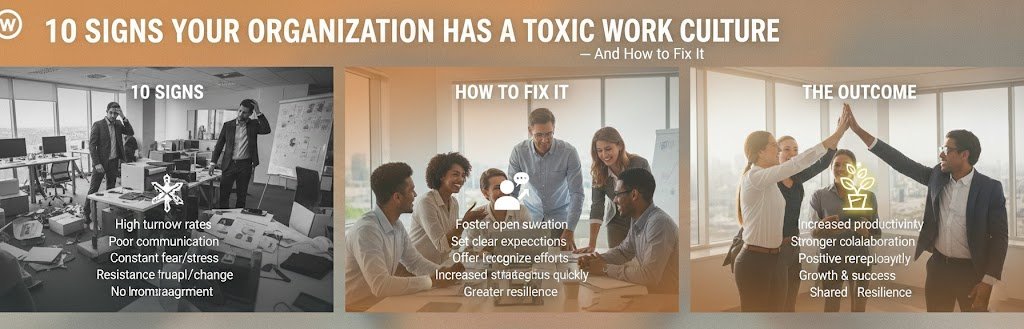
10 Signs Your Organization Has a Toxic Work Culture — And How to Fix It
A healthy workplace fuels motivation, collaboration, and innovation. A toxic one quietly drains energy, increases turnover, and damages performance. The challenge is that toxic culture rarely appears overnight — it develops gradually through behaviors, systems, and leadership patterns that go unaddressed.
Recognizing the warning signs early allows organizations to intervene before long-term damage occurs.
What Is a Toxic Work Culture?
A toxic work culture is an environment where negative behaviors, fear, poor communication, and lack of support become normalized. Employees may feel unsafe speaking up, undervalued, or constantly stressed.
10 Warning Signs of a Toxic Culture
- Poor Communication: Information is unclear, inconsistent, or withheld.
- Fear of Speaking Up: Employees avoid sharing ideas or concerns.
- Blame-Oriented Environment: Mistakes lead to finger-pointing rather than learning.
- High Turnover: Frequent resignations signal deeper issues.
- Lack of Trust: Teams operate in silos.
- Micromanagement: Leaders control every detail.
- Favoritism or Inequity: Unequal treatment damages morale.
- Chronic Stress and Burnout: Employees appear exhausted and disengaged.
- Unresolved Conflict: Tension simmers or repeatedly escalates.
- Low Engagement: Minimal initiative or enthusiasm.
The Impact on Performance
- Reduced productivity
- Increased absenteeism
- Poor collaboration
- Loss of institutional knowledge
- Difficulty attracting talent
- Higher operational costs
How to Fix a Toxic Culture
✔ Conduct an Honest Assessment
Gather feedback through surveys, interviews, or facilitated discussions.
✔ Model Healthy Leadership
Transparency, accountability, and empathy must be visible from the top.
✔ Improve Communication
Provide regular updates and encourage dialogue.
✔ Build Psychological Safety
Create an environment where employees can speak openly without fear.
✔ Address Conflict Constructively
Train managers in conflict resolution.
✔ Recognize Positive Behavior
Reinforce collaboration, integrity, and innovation.
Moving Toward a Healthy Culture
Culture change takes time and consistency. Organizations that prioritize trust, respect, and support create environments where both people and performance thrive.